
Pilot sites
INVESTWATER technologies, methodologies and tools are demonstrated in four pilot sites where different types of NBS are already operating at different development stages, in diverse contexts, ecosystems and scales.
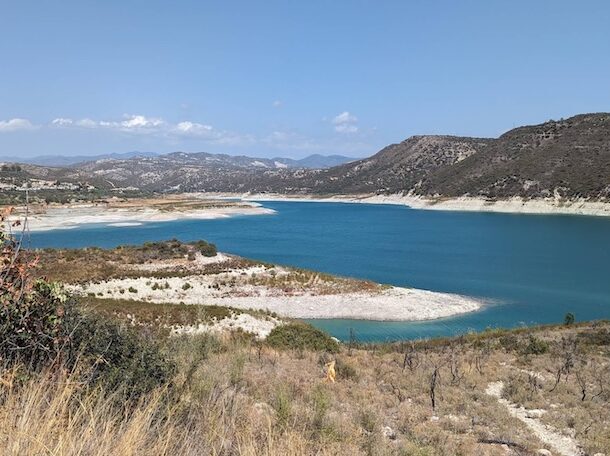
CYPRUS
Kouris River Watershed
Located in a semi-arid region of southern Cyprus, this watershed includes urban, peri-urban and agricultural zones. The region relies heavily on a shared coastal aquifer and has a population of approx. 66,000 people.
Key challenges: seawater intrusion into the coastal aquifer, overexploitation of groundwater resources, deterioration of hydrochemical water quality, lack of sufficient monitoring infrastructure, and low trust from local farmers in current water management strategies. The area is increasingly affected by drought and climate variability.
INVESTWATER contribution: development of opportunity mapping tools for aquifer recharge, enhanced performance monitoring of NBS, evaluation of NBS performance under climate stress, and strategies to upscale successful approaches.
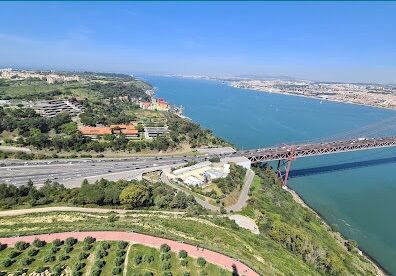
PORTUGAL
Almada Municipality
This coastal, urban area south of Lisbon covers 70 km², combining densely populated urban and peri-urban zones. It is underlain by a vulnerable aquifer that supports green spaces and agriculture.
Key challenges: groundwater quality issues related to nitrates, flood risk linked to urbanization and torrential streams, and seawater intrusion risk. There is a strong need for climate change adaptation through urban planning that mitigates these risks, preserves ecosystems and promotes biodiversity in a densely inhabited region.
INVESTWATER contribution: support to the General Drainage Plan through monitoring tools to assess NBS effectiveness, identification of new MAR opportunities, and contribution to the development of an agropark as a demonstration site for integrated NBS.

TUNISIA
Nadhour Saouaf Watershed
A 351 km² watershed located in a semi-arid region dominated by agricultural activities, with growing industrial development and rapid land use changes.
Key challenges: significant groundwater salinization, overexploitation of aquifers, increasing drought frequency due to climate change, agricultural productivity decline, and fragmented water governance. Data scarcity hampers effective planning.
INVESTWATER contribution: upgrade and expansion of an existing MAR scheme, installation of real-time monitoring systems, expansion of infiltration zones, and strengthening of local governance by building trust and capacity among stakeholders.
ITALY
Val di Cornia
Spanning approximately 600 km² in coastal Tuscany, this pilot site includes riverine zones, wetlands and productive aquifers that are critical to agricultural and ecological systems
Key challenges: seawater intrusion, degradation of aquifer-dependent ecosystems, historical overuse of groundwater for irrigation and urban supply, and limited integration of ecological needs into water management plans.
INVESTWATER contribution: strengthened monitoring of existing NBS, support to the implementation of the River Contract as a multi-stakeholder governance instrument, feasibility modelling of new NBS-to-MAR options, and contribution to a shared long-term water vision.
